
Lee County Circuit Court Overview
South Carolina uses Circuit Court as the primary trial court of general jurisdiction. In Lee County, Circuit Court is divided by function into Court of Common Pleas for civil matters and Court of General Sessions for criminal matters. The South Carolina Judicial Branch identifies Lee County as Judicial Circuit 3 and county number 31. The local Clerk of Court is the court-records officer for Common Pleas, General Sessions, and Family Court records.
Circuit Court should be distinguished from Probate Court, Magistrate Court, Municipal Court, and the appellate courts. Estate, marriage license, guardianship, conservatorship, and commitment matters route to Probate Court. Traffic, small claims, and many lower-level criminal matters route to Magistrate Court or municipal court where applicable. Appeals from trial courts move through South Carolina's appellate courts, primarily the Court of Appeals and the Supreme Court of South Carolina.
| Court / Office | Role | Address | Phone / Contact |
|---|---|---|---|
| Lee County Circuit Court | Common Pleas civil and General Sessions criminal trial court | Lee County Courthouse, 123 S. Main Street, Bishopville, SC 29010 | Clerk: 803-484-5341 |
| Lee County Clerk of Court | Records, filing, General Sessions, Common Pleas, Family Court | PO Box 387, Bishopville, SC 29010-0387 | 803-484-5341; fax 803-484-1632 |
| Lee County Family Court | Family and child-support records through Clerk office | Lee County Courthouse | Hope Millwood, ext. 3167 |
| Lee County Probate Court | Estates, marriage licenses, guardianships, conservatorships, commitments | Room 103 / PO Box 24, Bishopville, SC 29010 | 803-484-5341 ext. 3155 |
| Lee County Magistrate Court | Small claims, traffic, warrants, lower criminal matters | 115 Gregg Street, Bishopville, SC 29010 | 803-484-6463 |
Lee County Circuit Court Divisions
Common Pleas is the civil side of Circuit Court. Lee County's Clerk page says Common Pleas services include filing civil disputes, scheduling civil actions and motion rosters, and updating roster reports on the judicial website. Typical records can include summonses, complaints, answers, motions, affidavits, orders, judgments, settlement filings if filed, notices of appeal, executions, and judgment-related paperwork.
General Sessions is the criminal side of Circuit Court. The Clerk page says General Sessions houses criminal warrants, bond paperwork, motions, and sentencing sheets. Those documents are part of the court case file after criminal charges are filed or prosecuted. The final disposition comes from the court record, not from an arrest listing alone.
Family Court is also handled through the Clerk of Court and Family Court office. Divorce decrees, custody, child support, protective orders, juvenile matters, and adoption-related filings may involve different public access rules. Public divorce decree requests route through the Clerk where filed, while DPH divorce reports are separate state vital records.
Lee County Circuit Court Comparison
The Lee County court system works best when the record request starts at the right level. Circuit Court is not the correct office for every court record. Probate Court, Magistrate Court, and Municipal Court have separate roles. The comparison below follows the research map's lower courts and local office descriptions.
| Issue | Circuit Court | Probate Court | Magistrate / Municipal Court |
|---|---|---|---|
| Civil cases | Common Pleas civil actions and larger disputes | Trusts, powers of attorney issues, minor settlements under state probate authority | Small claims up to $7,500 in Magistrate Court |
| Criminal cases | General Sessions criminal case files, motions, sentencing sheets | Not the criminal trial court | Traffic, warrants, and lower-level criminal matters |
| Family matters | Family Court records through Clerk office | Guardianships, conservatorships, marriage licenses, commitments | Limited or municipal matters only where applicable |
| Search path | Public Index, Court Rosters, Clerk of Court | Probate Court appointment, forms, and local clerk contacts | Magistrate phone options, traffic search, municipal court if applicable |
Lee County Circuit Case Flow
A criminal matter can begin with arrest or warrant activity, then move through Magistrate or bond paperwork, prosecution by the Third Judicial Circuit Solicitor, General Sessions case entries, motions, plea or trial, sentencing, and appeal. A civil matter begins with a complaint or petition in Common Pleas, then moves through service, answer, motions, possible mediation, hearing or trial, judgment, post-judgment filings, and appeal where allowed. Family matters use their own court process and access limits.
Criminal flow: Arrest or warrant › bond or first appearance › Solicitor filing or indictment › General Sessions case › motions › plea or trial › sentencing sheet › appeal.
Civil flow: Complaint or petition › service › answer › motions › roster or hearing › trial or order › judgment › appeal.
Note: A roster is a calendar of scheduled court activity, while a case file is the record of filings and court actions.
Lee County Circuit Court Access
The South Carolina Judicial Branch links Lee County to the Public Index for case records and to Court Rosters for docket calendars. The state case-records page notes that searching public case records requires a browser with cookies and JavaScript enabled, and some browsers may require pop-up permissions to view case detail. When the portal fails or the record is older, restricted, sealed, expunged, or not digitized, the Clerk of Court is the fallback.
Rule 610 may apply to judicial records requests beyond ordinary individual case searches, especially bulk or compiled judicial data. South Carolina Rule 41.2 requires redaction of personal identifying information in court filings. Juvenile records, adoption records, mental-health matters, sealed cases, expunged matters, victim details, and sensitive financial or medical information may be withheld or redacted.
Lee County Solicitor Defender
Lee County is in the Third Judicial Circuit for prosecution. South Carolina calls the county prosecutor the Solicitor. The Solicitor is Ernest A. Finney III, and the official page lists prosecution of General Sessions Court and Family Court juvenile matters, victim services, Pretrial Intervention, and Juvenile Arbitration. Lee County contact information in the research includes 803-484-5341 ext. 381, with local staff directory entries for Assistant Solicitor, Pre Trial Intervention, and Drug Court Administrator contacts.
Public Defender appointment follows a different route. SCCID says public defenders are appointed by the court to represent indigent defendants in criminal court. Lee County's Clerk page says a Public Defender application can be completed in the Clerk's office with a $40.00 application fee. Criminal charge questions often require more than one office: detention for custody, Solicitor for prosecution or diversion, Clerk for filed case records, and Public Defender for appointed defense.
Federal Courts Near Lee County
Federal court is separate from Lee County Circuit Court. A Lee County arrest or state case does not become federal unless a federal agency or prosecutor files a case, a federal civil action is filed, or a bankruptcy or appellate matter exists in the federal system. Federal trial-court jurisdiction is the U.S. District Court for the District of South Carolina, while federal bankruptcy is handled by the U.S. Bankruptcy Court for the District of South Carolina. Public searches use PACER, and attorney filing uses CM/ECF.
The U.S. District Court for the District of South Carolina is the federal trial court source for South Carolina federal cases.
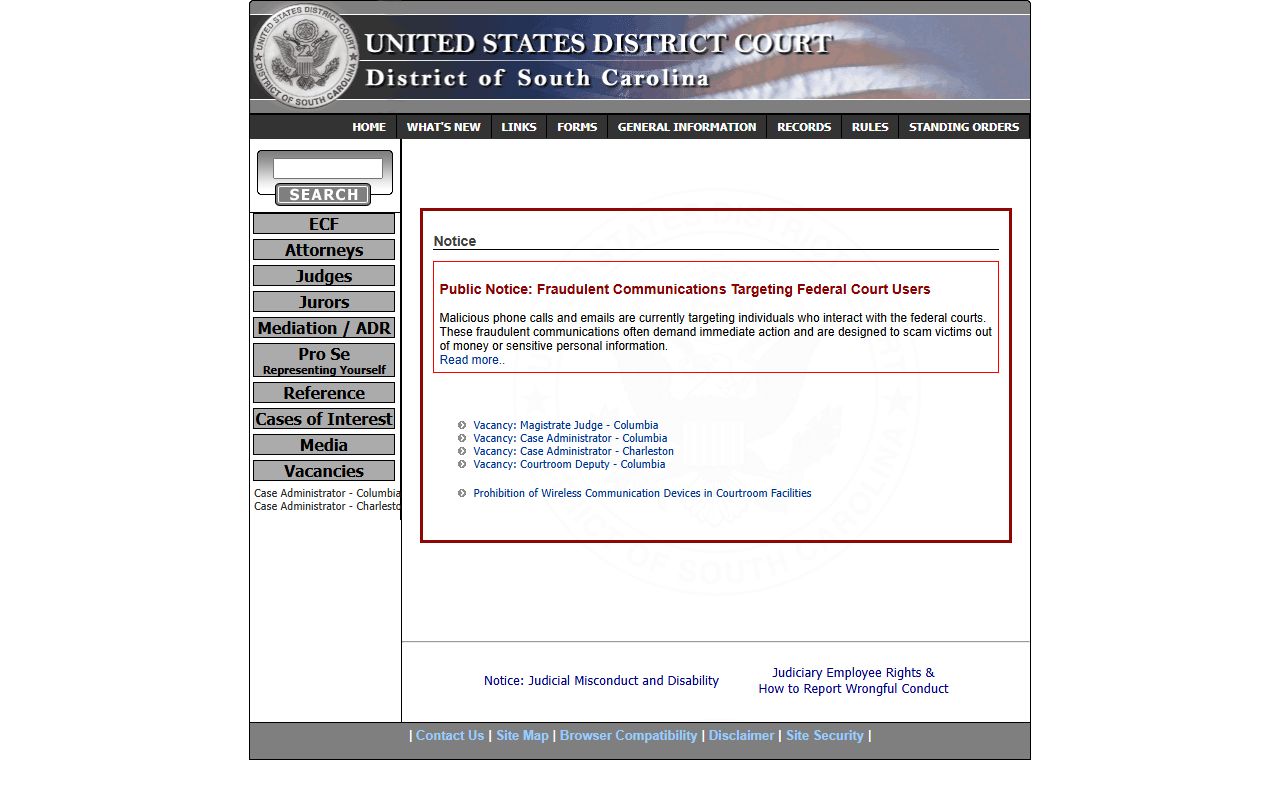
That court is separate from the Lee County Circuit Court case path and the South Carolina Public Index.
The District of South Carolina CM/ECF system supports federal electronic filing.
CM/ECF is not the public Lee County Circuit Court search portal and should not be used for state case lookup.
The PACER federal records access system is the public search route for many federal dockets and documents.
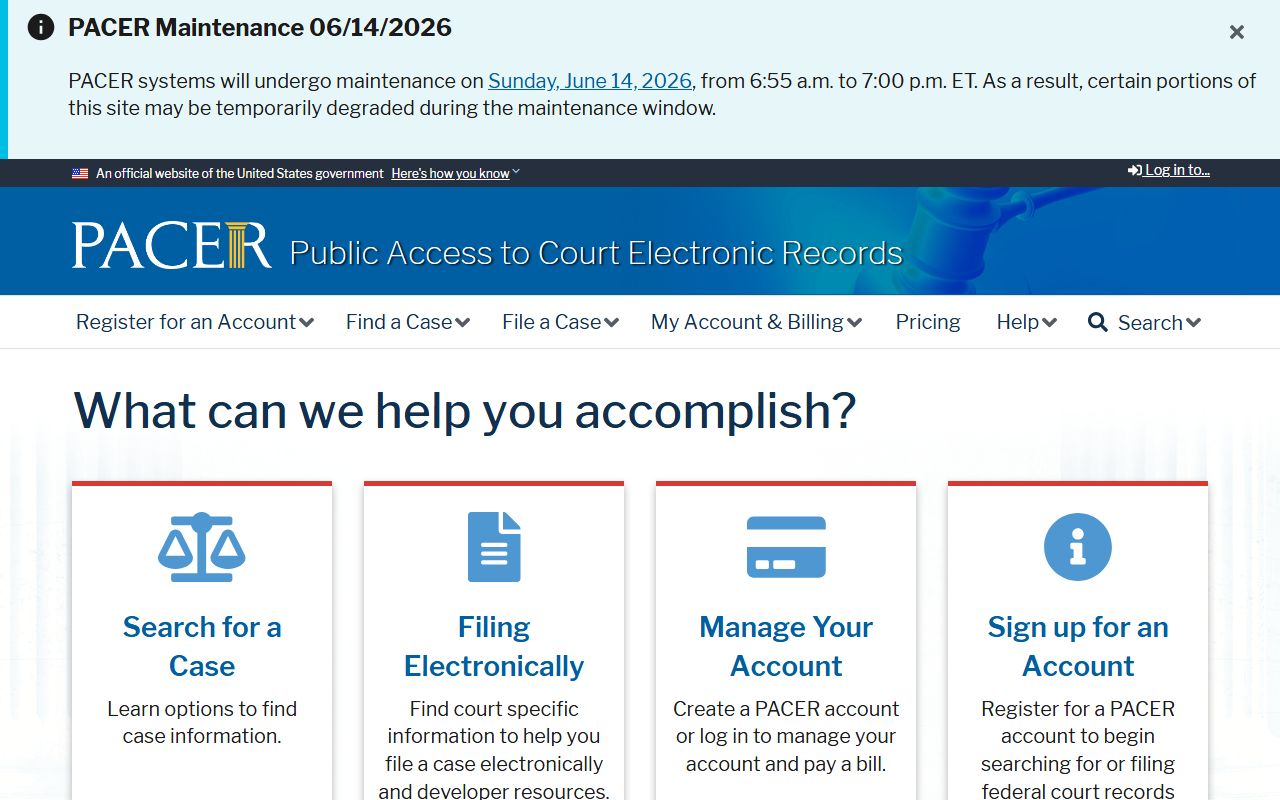
PACER may show federal cases tied to South Carolina, but it will not replace Lee County Circuit Court records.
Lee County Appeals and Opinions
Appeals from South Carolina trial courts move through the state appellate courts, primarily the Court of Appeals and the Supreme Court of South Carolina. Federal appeals from the U.S. District Court for the District of South Carolina go to the U.S. Court of Appeals for the Fourth Circuit. Bankruptcy matters use the federal bankruptcy court system. A Lee County Circuit Court judgment may have trial-court entries in the state Public Index and separate appellate records if an appeal is filed.
The U.S. Bankruptcy Court for the District of South Carolina is the source for federal bankruptcy matters.
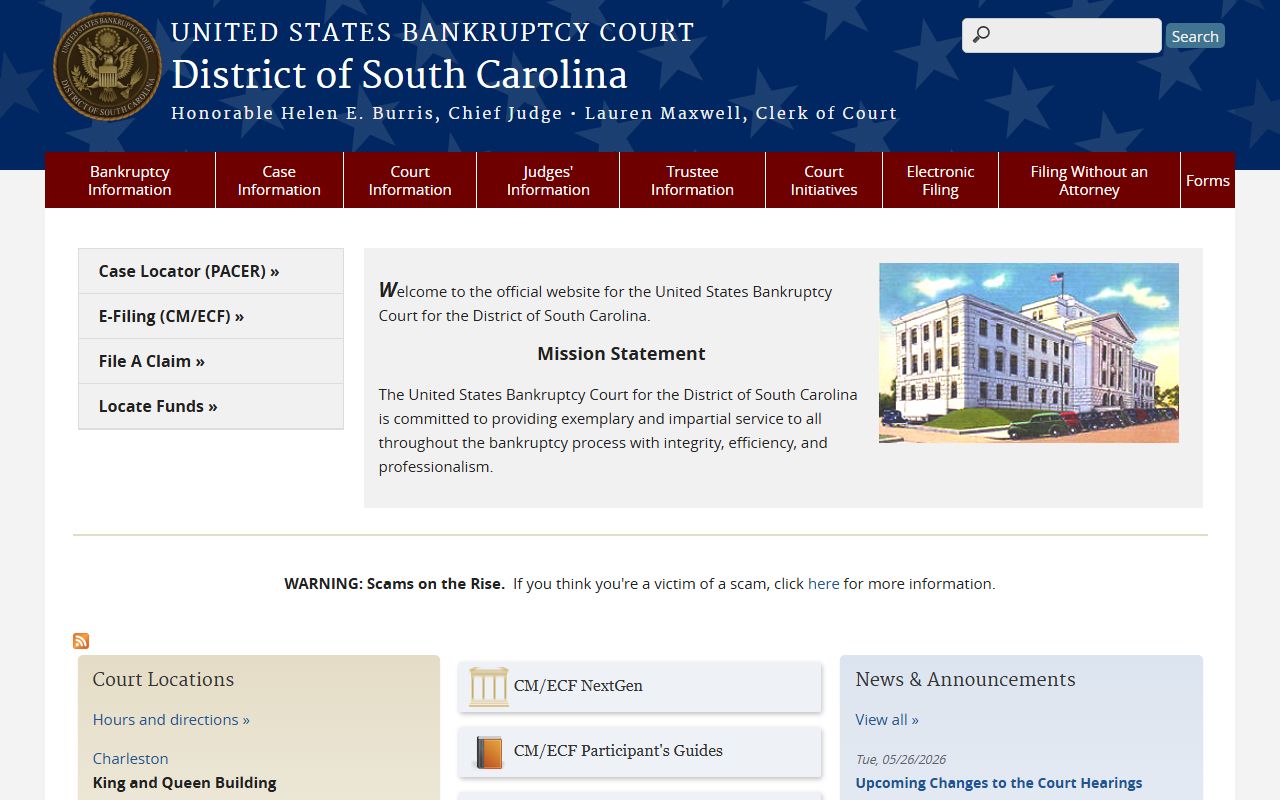
Bankruptcy cases are federal records and should not be searched as Lee County Circuit Court civil filings.
The U.S. Court of Appeals for the Fourth Circuit handles federal appeals from South Carolina federal trial courts.
Fourth Circuit records are relevant only after a federal appeal, not for routine Lee County state trial records.
CourtListener can be a free research source for public opinions and selected dockets where available.
CourtListener can supplement legal research, but official Lee County Circuit Court records still come from the judicial portal or Clerk.