
Lee County Court Dockets Explained
A docket is the court's running list of actions in a case. It can show filings, orders, hearing notices, continuances, bond events, motions, pleas, disposition entries, and sentencing entries depending on the case type. A roster is more calendar-focused. It shows cases set for a hearing, motion term, trial term, or other scheduled court event. Lee County research makes this distinction important because the South Carolina Judicial Branch provides both a Public Index for case records and a separate Court Rosters path for schedules.
The Lee County Clerk of Court page says Common Pleas staff schedule civil actions and motion rosters and update roster reports on the judicial website. General Sessions criminal court records are also under the Clerk of Court office, and the local page identifies criminal warrants, bond paperwork, motions, and sentencing sheets as General Sessions documents. That means a roster may help find when something is set, while the Public Index and Clerk help explain what was filed and what happened.
Note: A roster can list a hearing without showing every document filed in the Lee County court case.
Find Lee County Court Dockets
The main schedule path is the official Lee County Court Rosters portal. The case-history path is the Lee County Public Index. Use rosters first for hearing dates and court calendars. Use the Public Index next for case number, parties, filings, docket entries, status, and disposition. Both are state-hosted publicindex.sccourts.org tools, and the state court site notes that cookies, JavaScript, and sometimes pop-ups must be enabled.
For statewide court structure context, the assigned docket image comes from the South Carolina Judicial Branch Circuit Court overview.
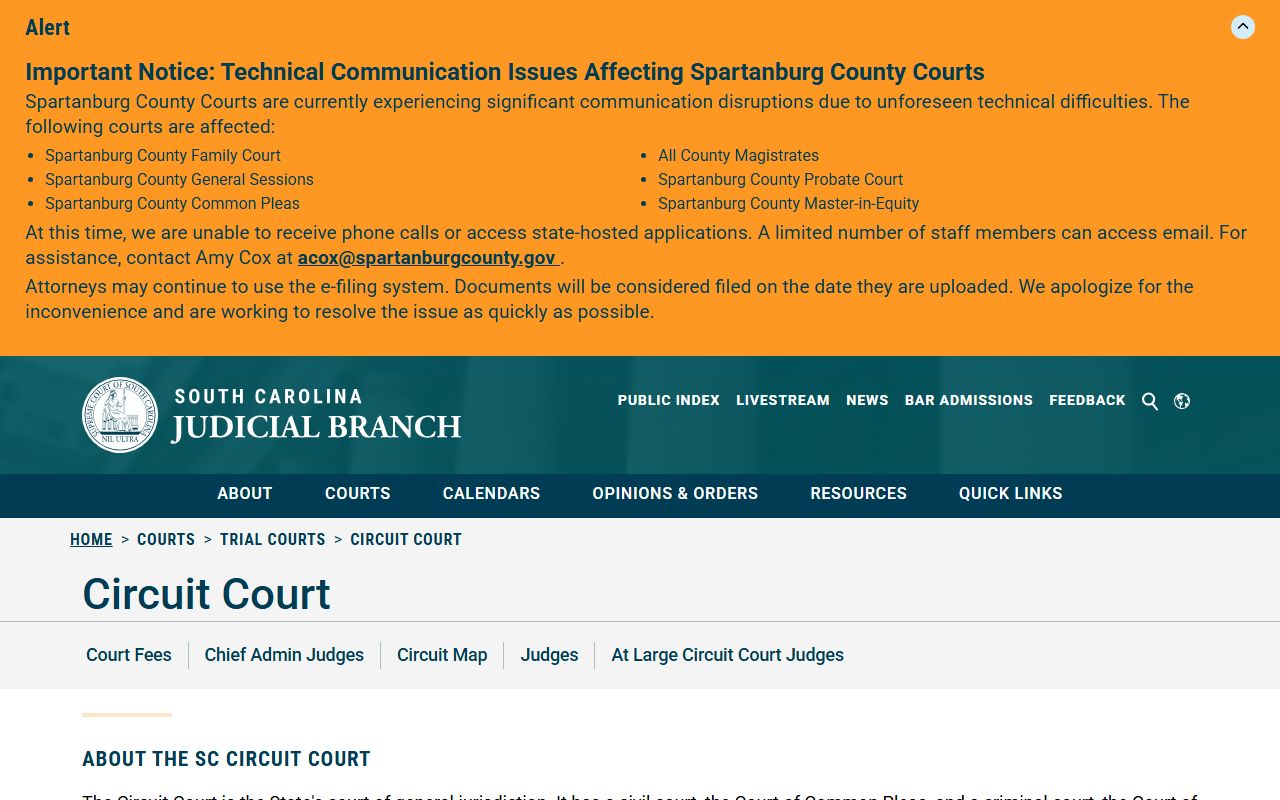
Circuit Court matters are central to Lee County docket searching because Common Pleas civil and General Sessions criminal cases route through that level.
- Start with the Lee County Court Rosters portal when the need is a hearing date, motion roster, trial term, or court calendar.
- Open the Lee County Public Index when the need is the case history, docket events, charge status, parties, or disposition.
- Search by case number if known. If not, use party name and narrow by court type or date fields when they appear.
- Check whether the matter belongs in Circuit Court, Magistrate Court, Probate Court, Family Court, Municipal Court, or an appellate court.
- Contact the Clerk, Magistrate Court, or Probate Court if a hearing is missing, recently changed, restricted, or tied to a county holiday.
Lee County Court Roster Fields
The Lee County Court Rosters portal did not fully render in the research fetcher, so the table below keeps the documented fields partial. It should be read as a practical roster-search inventory, not as a promise that every field appears in every browser session. The official roster URL and the Clerk page's roster-updating statement are confirmed.
| Field Label | Type | Required | Options / Format Notes |
|---|---|---|---|
| County | Implied URL path | Yes | Lee County is selected by the direct court rosters URL. |
| Court / Roster Type | Dropdown | Unspecified | May include Common Pleas, General Sessions, Family Court, Summary Court, or other supported rosters. |
| Date / Term | Dropdown or date | No | Used to filter the calendar period or term if exposed. |
| Judge / Courtroom | Dropdown | No | Possible filter, but not verified in the captured text. |
| Search / View Roster | Button | Not applicable | Opens the selected roster or calendar. |
Lee County Docket Entry Fields
A docket entry is a line in the case history. It may describe a complaint, indictment, bond order, motion, hearing, continuance, judgment, plea, sentencing sheet, notice of appeal, or other court action. The research did not open a live sample case, so this field inventory is based on the court-record field list documented in the Lee County research, not on a personal case record.
| Field | What It Shows |
|---|---|
| Entry Date | The date the filing, hearing, order, or event was entered in the case history. |
| Event Type | The kind of docket action, such as motion, order, hearing notice, plea, judgment, or sentencing entry. |
| Party or Source | The party, attorney, clerk, prosecutor, judge, or agency tied to the docket event when shown. |
| Hearing Date | The scheduled date and time for court, if the entry is calendar-related. |
| Disposition | The outcome of a claim, charge, motion, or case when the court has entered one. |
| Document Indicator | A filing or event reference; downloadable document images are not guaranteed. |
Lee County Dockets by Court
Lee County court dockets split by court level. Circuit Court covers Common Pleas civil and General Sessions criminal cases. Family Court is handled through the Clerk of Court/Family Court office. Magistrate Court handles traffic, small claims, warrants, and lower-level criminal matters. Probate Court handles estates, marriage licenses, guardianships, conservatorships, trusts, minor settlements, and commitments. Municipal Court records may appear in the state Public Index or traffic search where a municipal court participates, but the research does not identify a single Lee County municipal docket portal.
Lower court context comes from the South Carolina Judicial Branch Magistrate Court overview.
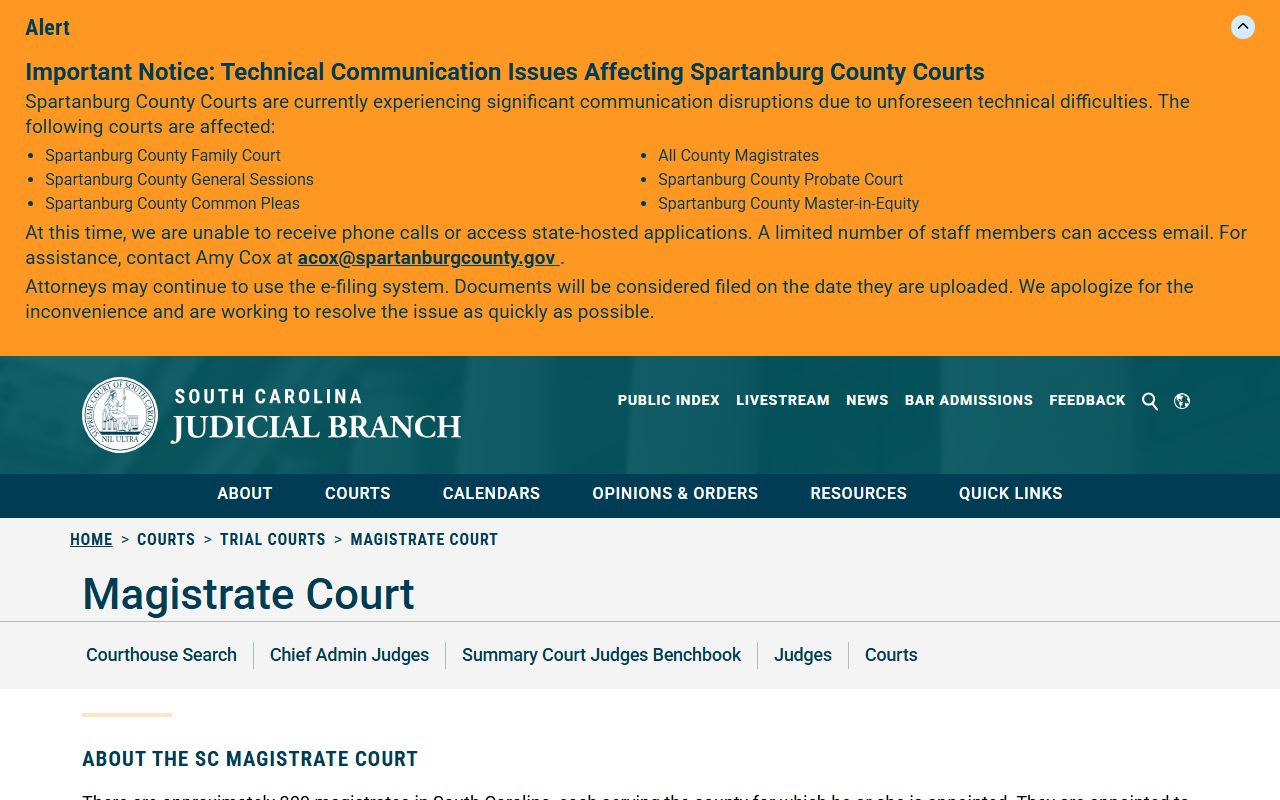
Magistrate Court matters often have practical schedule issues because traffic, small claims, and warrant-related appearances may not follow the same path as Circuit Court rosters.
- Circuit Court: Common Pleas civil and General Sessions criminal rosters, motion terms, trial settings, and case events.
- Family Court: domestic and child-support matters through the Clerk of Court/Family Court office, with restricted access for many sensitive files.
- Magistrate Court: traffic, small claims, miscellaneous criminal matters, wildlife, hunting, boating, fishing cases, and warrant desk appearances.
- Probate Court: estate and fiduciary hearings, marriage-license office matters, guardianship, conservatorship, trust, and commitment proceedings.
- Appellate courts: appeals from trial courts use state appellate systems, not the Lee County trial roster.
Roster vs Lee County Public Index
A roster is the calendar layer. It is best for asking when a court event is set, whether a motion term is posted, or whether a case appears on a scheduled list. The Public Index is the case-history layer. It is best for asking what was filed, who the parties are, what docket events exist, and how a charge or claim was resolved. The two tools overlap, but they are not substitutes.
| Question | Court Roster | Public Index |
|---|---|---|
| Primary use | Hearing calendar and roster placement. | Case history, parties, docket entries, and status. |
| Best search need | Upcoming court date, motion roster, trial term. | Filed documents, charge status, disposition, judgment. |
| Lee County owner | State-hosted roster with local court updates. | State-hosted case index linked by SC Judicial Branch. |
| Limit | May not show the full case file. | May not show every hearing calendar or document image. |
When a roster and case index appear to disagree, recent scheduling changes, browser issues, sealed entries, holiday closures, or different court levels may explain the gap. The Clerk of Court is the correct fallback for Circuit Court rosters, while Magistrate Court is the fallback for traffic, small claims, and warrant-related appearances.
Lee County Dockets in Lower Courts
Lee County Magistrate Court is a key docket source because it handles traffic court, small claims up to $7,500, warrant options, and miscellaneous criminal cases. The local Magistrate page lists phone options for traffic, civil claims, and warrants. It also states that Magistrate Court does not accept personal or business checks for court fines, accepts cash or money orders for fines, accepts cash or credit card in person, permits eligible online payments through sc.gov, does not accept telephone payments, and tells users not to send cash by mail.
Municipal Court context is supported by the South Carolina Judicial Branch Municipal Court overview.
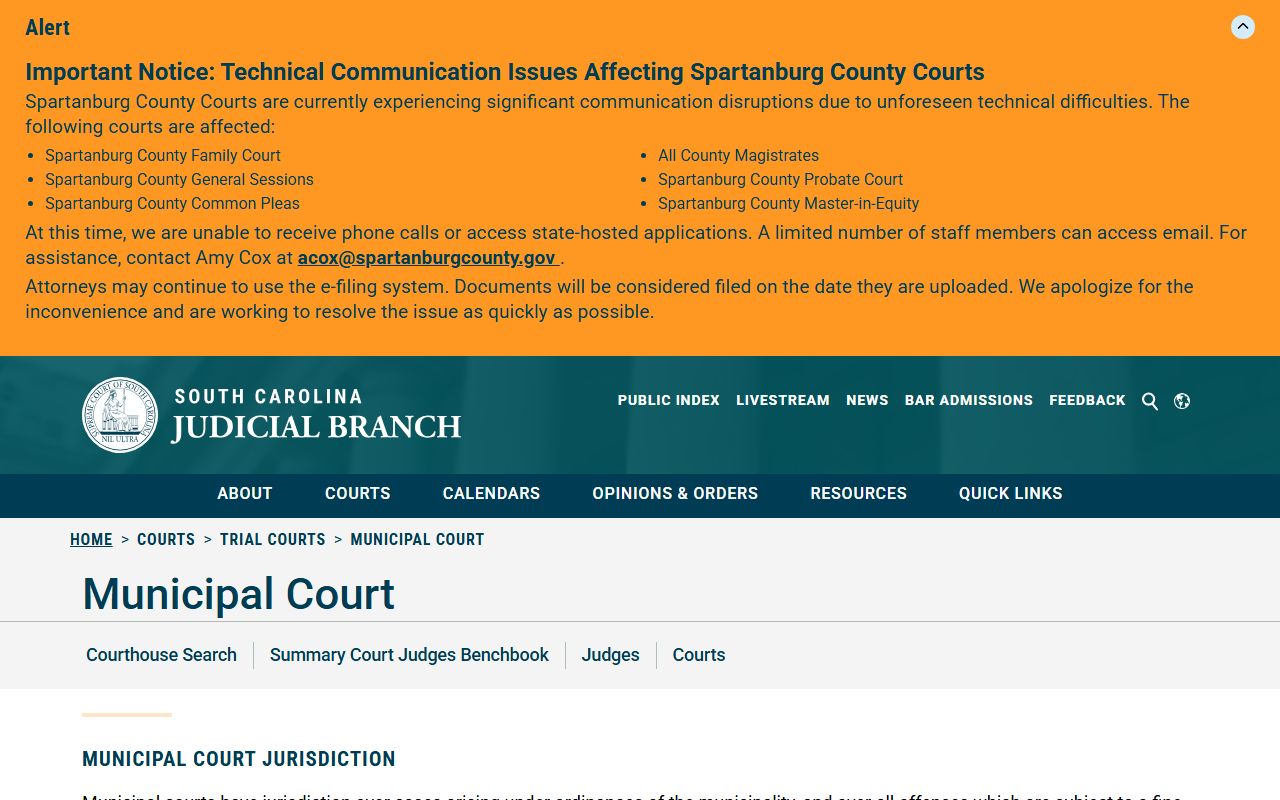
Municipal matters may follow a city court path where applicable, so a missing Lee County Circuit Court docket should not end the search.
Read Lee County Docket Entries
Docket terms are short because they are built for court use. A motion is a written request for a court order. A roster is a schedule. A disposition is the outcome of a case or charge. A continuance means the matter was moved to another date. A bench warrant is usually issued by a judge, often for failure to appear or failure to comply with a court order. A nolle prosequi, often shortened to nol pros, means the prosecutor did not continue the charge.
Criminal dockets should be read with care. A charge is an accusation. A disposition is the outcome. A sentence is the punishment imposed after a conviction. The Lee County Clerk page specifically identifies sentencing sheets as General Sessions documents, so sentencing detail belongs in the court file rather than in a jail roster alone. For a full criminal case file, use Lee County criminal court records with the Public Index and Clerk fallback.
Lee County Docket Fallbacks
When a docket is missing, first check browser settings and the court level. The state case search requires cookies and JavaScript, and some details may require pop-ups. Next, check whether the case is in Circuit Court, Magistrate Court, Probate Court, Family Court, Municipal Court, or an appellate court. A traffic ticket may appear in the statewide traffic search rather than a Circuit Court roster. A probate matter may require the Probate Court because Lee County was not visible in the captured statewide probate search dropdown.
Lee County Clerk of Court
123 S. Main Street
Bishopville, SC 29010
803-484-5341
General Sessions and Common Pleas roster fallback
Lee County Magistrate Court
115 Gregg Street
Bishopville, SC 29010
803-484-6463
Traffic Option 1, Civil Claims Option 2, Warrants Option 3