
How to Search Lee County Court Records
Most Lee County court records begin with the South Carolina Judicial Branch Case Records Search or the direct Lee County Public Index. Lee is listed by the Judicial Branch as Judicial Circuit 3 and County Number 31. The Public Index is the main public route for Circuit Court filings, including Common Pleas civil matters and General Sessions criminal matters when the case is public and available online.
The state search system can require cookies, JavaScript, and pop-up access before case detail will display. If a Lee County court record does not appear, that does not prove no record exists. The case may be in Magistrate Court, Probate Court, Family Court with access limits, a municipal court, an older paper file, a sealed or expunged matter, or a state system such as SLED CATCH or SCDMV.
- Identify the court level before searching. Circuit Court handles Common Pleas civil cases and General Sessions criminal cases.
- Open the state case search and choose Lee County, or use the direct Lee Public Index link.
- Search by exact case number when known. If not, use party names and narrow by date or court type when the portal allows it.
- Use Lee County Court Rosters for hearing calendars, motion rosters, and trial rosters.
- Contact the Clerk, Magistrate Court, Probate Court, sheriff, or detention center when the online source is incomplete.
The Lee County staff directory is a useful fallback because it lists direct court contacts by room, extension, and record function. The directory confirms Clerk of Court staff in Rooms 104, 106, and 107, Probate Court in Room 103, Solicitor staff in Rooms 212 and 216, and direct warrant and traffic contacts for Magistrate Court.
The official county directory image assigned to the home page comes from the Lee County staff directory.
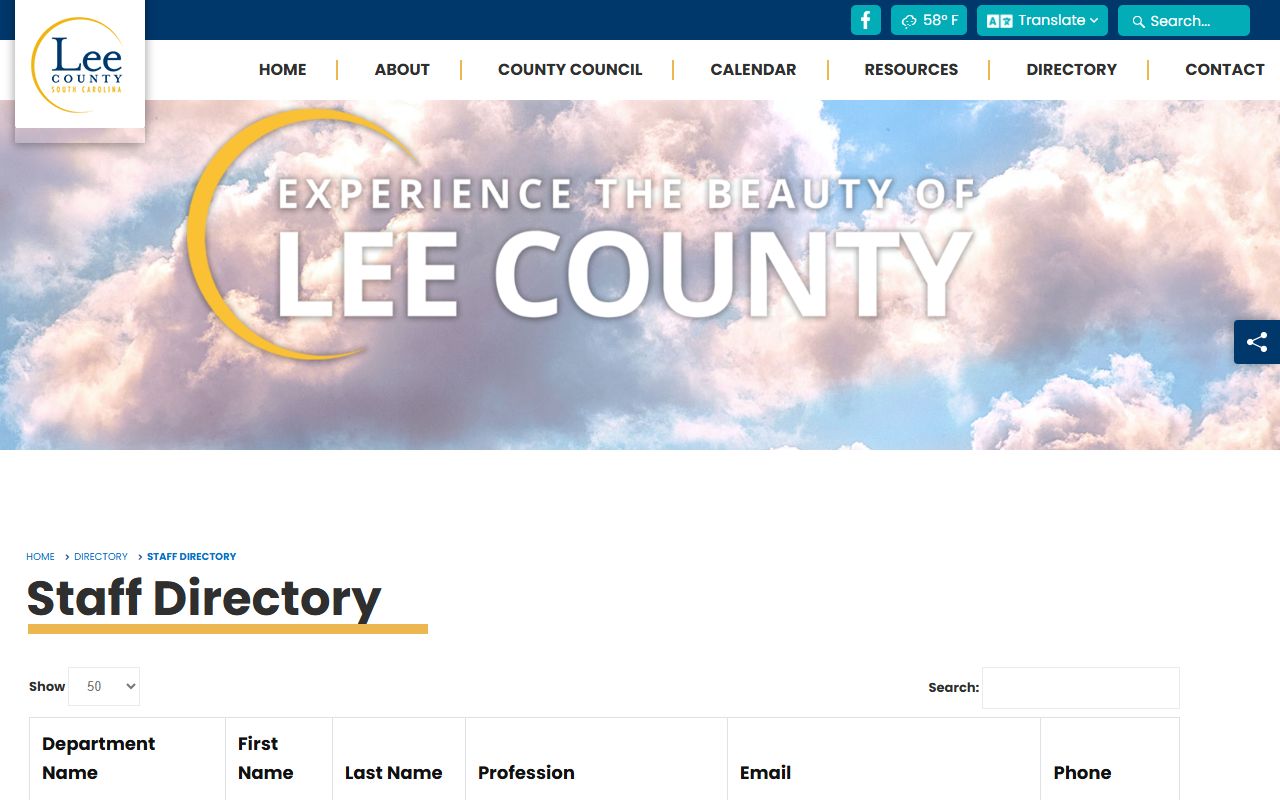
Those room numbers and direct extensions matter when a Lee County court records search must move from the online index to the counter or a named office.
Lee County Court System
South Carolina uses Circuit Court as the main trial court of general jurisdiction. In Lee County, Circuit Court includes the Court of Common Pleas for civil cases and the Court of General Sessions for criminal cases. Family Court, Probate Court, Magistrate Court, Municipal Court, and Master-in-Equity functions sit beside that system, while appeals move through the Court of Appeals and the Supreme Court of South Carolina.
Lee County court users often need more than one office. A felony arrest may begin with booking at Sumter-Lee Regional Detention Center, then bond or warrant action in Magistrate or General Sessions paperwork, prosecution by the Third Judicial Circuit Solicitor, case entries in Public Index, and later SCDC custody if a person is sentenced to state prison.
Case flow: Magistrate or Municipal Court › Circuit Court › Court of Appeals › Supreme Court of South Carolina
| Court | Jurisdiction | Case Types |
|---|---|---|
| Lee County Circuit Court | General jurisdiction trial court | Common Pleas civil cases and General Sessions criminal cases |
| Lee County Magistrate Court | Summary Court | Traffic, small claims up to $7,500, warrants, and minor criminal matters |
| Lee County Probate Court | County probate jurisdiction | Estates, marriage licenses, guardianships, conservatorships, trusts, and commitments |
| Family Court | Domestic and juvenile matters | Divorce, child support, custody, juvenile, and related family filings |
The South Carolina Judicial Branch Lee County courthouse page confirms the county's circuit, courthouse contact, and quick links to case records and rosters.
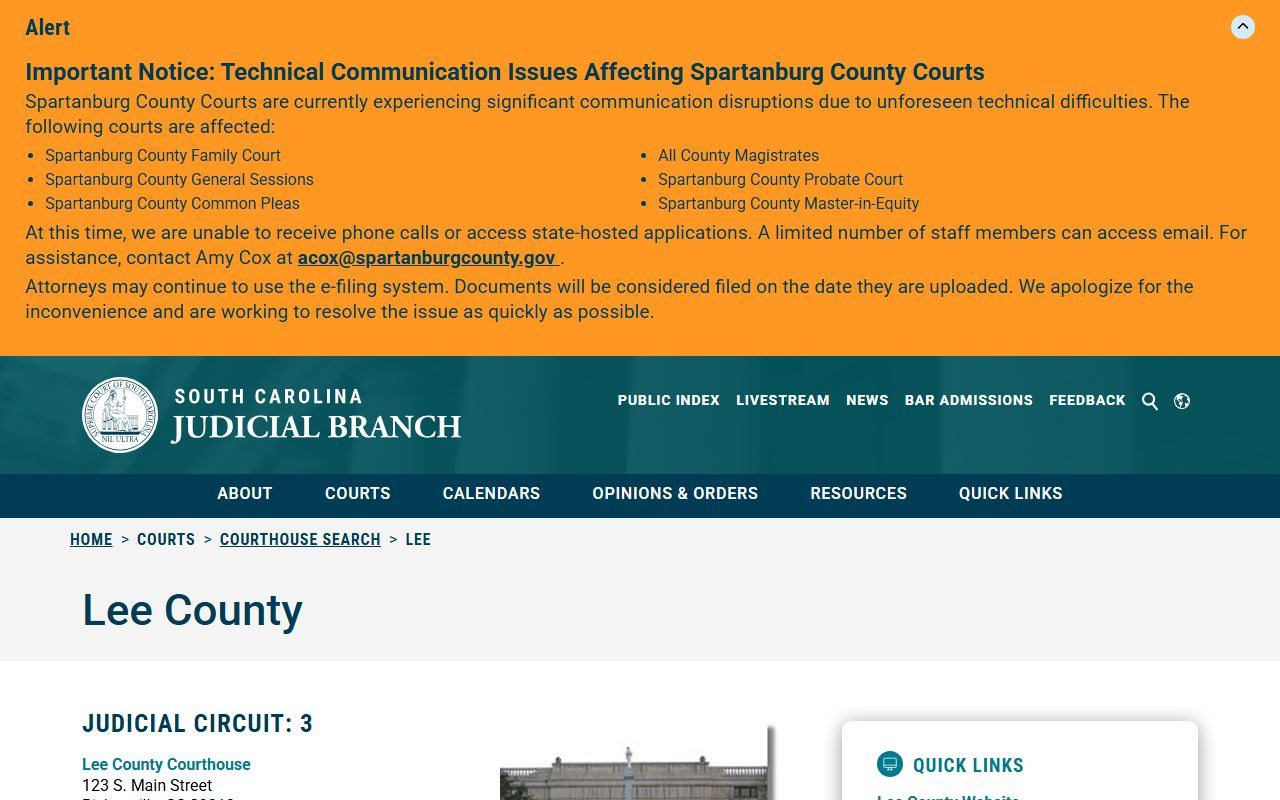
The state courthouse listing is the best official starting point when a reader needs to verify that a Lee County court records source is part of the Judicial Branch system.
Lee County Court Offices
The main courthouse for Circuit Court and courthouse-based county offices is the Lee County Courthouse at 123 S. Main Street in Bishopville. The Clerk of Court, Probate Court, Solicitor staff, and Probation and Parole offices are listed in that building by room number. Magistrate Court is separate at 115 Gregg Street, so traffic, small claims, and warrant desk visits should not be routed to the wrong counter.
The Lee County government home page is one of the home-page source images.

The county site ties the courthouse, elected officials, department pages, staff directory, holidays, and local public-safety offices together.
Types of Lee County Court Records
Lee County court records include civil, criminal, family, probate, traffic, warrant, and custody-related records, but they are not all held by one office. The Clerk of Court handles Common Pleas, General Sessions, and Family Court functions. Probate Court handles estates and marriage licenses. Magistrate Court handles traffic, small claims, warrants, and miscellaneous lower-level criminal matters.
Records outside the courthouse may still relate to a court case. Sumter-Lee detention data can show current custody and booked charges, while SLED CATCH provides a statewide criminal-history product. SCDMV keeps driver records that are separate from court traffic tickets.
- Common Pleas records cover civil disputes, motions, rosters, judgments, and filed civil papers.
- General Sessions records include criminal warrants, bond paperwork, motions, dispositions, and sentencing sheets.
- Family Court records include divorce and child-support matters, with public access limits for sensitive records.
- Probate records cover estates, marriage licenses, guardianships, conservatorships, trusts, and commitments.
- Traffic records are usually routed through Lee County Magistrate Court and the statewide traffic ticket search.
What Lee County Court Records Show
A Lee County court record may show parties, attorneys, case status, hearing dates, docket entries, charge labels, bond events, motion activity, orders, judgments, dispositions, and sentencing information. The exact fields depend on the court and record type. A docket is the case history, while a roster is a calendar of scheduled matters.
| Field | What It Shows |
|---|---|
| Case Number | The official case identifier, best searched exactly when known. |
| Filing Date | The date a civil action, criminal filing, petition, warrant, or citation entered the court system. |
| Parties | Names such as plaintiff and defendant, State and defendant, petitioner and respondent, or estate party. |
| Charges / Cause | The offense, civil cause, probate matter, traffic citation, or petition type, depending on court. |
| Disposition | The outcome or current status, such as dismissed, guilty plea, closed, transferred, or pending. |
| Sentence / Judgment | The sentence, order, judgment, restitution, fine, or other final court action when public and available. |
Public Access to Lee County Court Records
South Carolina law gives broad access to public records, but court files also follow judicial rules, confidentiality laws, and redaction duties. For Lee County court records, the practical path is to use the state Public Index and Court Rosters first, then route requests to the owning office. Bulk or compiled judicial data is different from a one-case lookup.
Key Statutes:
S.C. Code Title 30, Chapter 4 defines South Carolina public records and exemptions.
SC Judicial Branch Rule 610 governs judicial records requests, bulk records, and compiled data limits.
SC Rule 41.2 requires redaction of personal identifying information in court filings.
S.C. Code Sections 63-19-2010 and 63-19-2020 restrict public access to juvenile court records.
The Public Index image assigned to the home page comes from the official Lee County Public Index.
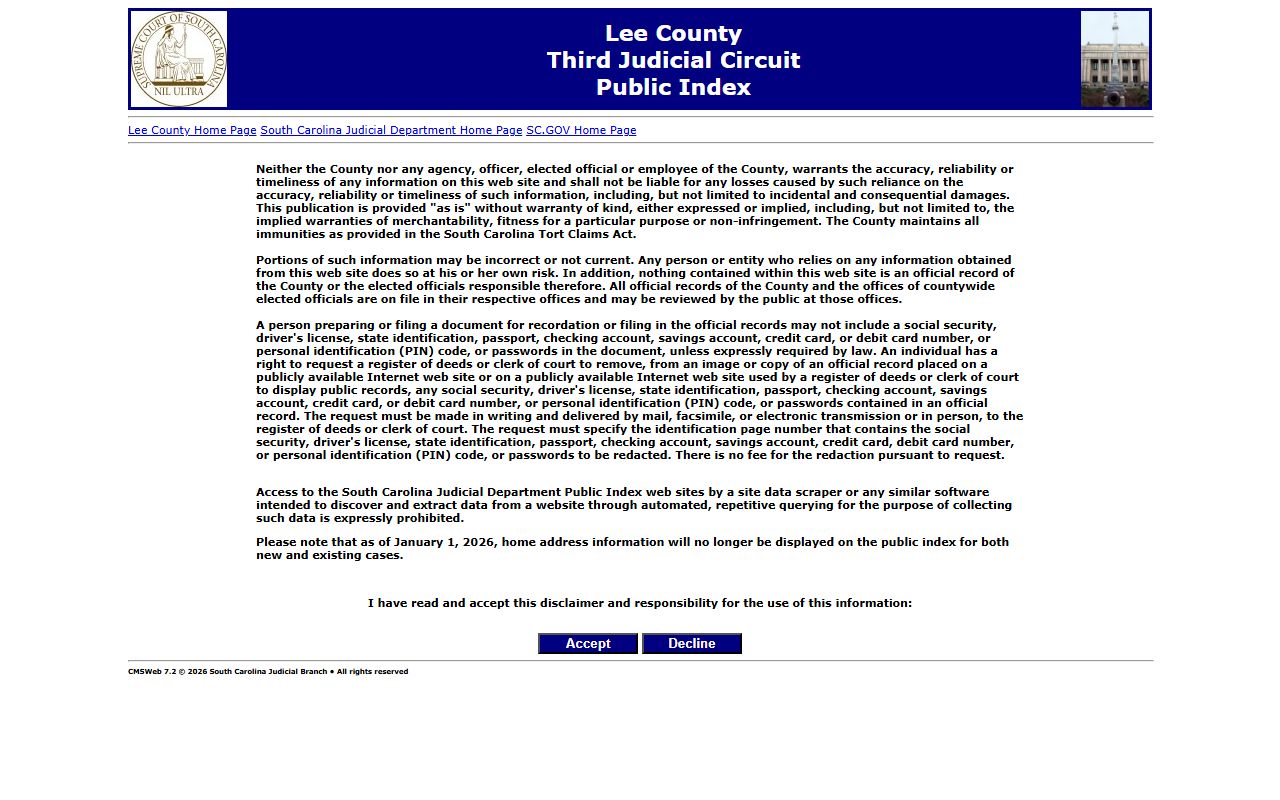
The Public Index is the county-specific search layer, while FOIA, Rule 610, redaction rules, and confidentiality statutes explain why some data is missing.
Restricted Lee County Court Records
Not every Lee County court record is public online. Juvenile records, adoption records, mental-health commitment records, some family records, sealed warrants, sealed indictments, expunged criminal matters, victim details, medical information, financial identifiers, and personal identifying information may be withheld or redacted.
Expungement is not handled by simply asking the Clerk to remove a listing. Lee County is in the Third Judicial Circuit, and South Carolina law places many criminal expungement applications with the solicitor's office. SLED CJIS asks users to allow four weeks after SLED receives an order for destruction of arrest records before checking state criminal-history removal.
Lee County Specialty Programs
Official Lee County specialty-court detail is limited, but the staff directory lists LaTascia Bailey as Drug Court Administrator for the Solicitor's Office, and the Third Judicial Circuit Solicitor lists Pretrial Intervention and Juvenile Arbitration as diversion programs. These programs sit beside ordinary public case-record access because participation, eligibility, and completion can affect how a charge appears or resolves.
Pretrial Intervention is authorized through South Carolina solicitor programs, and state law lists application and participation fees with waiver or scheduling options for indigency. Traffic Education Program law can also produce a noncriminal disposition for eligible traffic offenses, with limited records retained to prevent repeat participation.
Lee County Sheriff and Jail
The Lee County Sheriff's Office is led by Sheriff Daniel Simon. The county page lists the office at PO Box 89, Bishopville, with main phone 803-484-5353. Direct sheriff records and warrant questions can route to Kay Arrants at 803-483-3121, while sex offender registry questions can route to Lenetta McElveen at 803-483-3120.
Lee County local custody is handled through the Sumter-Lee Regional Detention Center rather than a Lee-only jail roster. The detention page links the CentralSquare inmate inquiry, and the facility lists visiting hours Monday through Saturday. Current custody belongs in Lee County inmate records, while active warrant questions start with Magistrate Court Option 3 or sheriff warrants and records.
The home-page public-safety image comes from Lee County's 911 Communications page.

That local public-safety context supports the sheriff and warrant routing without turning an emergency page into a court-record search source.
Lee County Marriage, Divorce, and Probate
Marriage licenses are handled by Lee County Probate Court, and that office states appointments are required. Divorce decrees are different. A divorce decree or case file comes from the Clerk of Court where the divorce was filed, while South Carolina DPH provides certified reports of divorce for eligible requesters and covered dates. Estate, guardianship, conservatorship, commitment, trust, and related probate matters route to Probate Court.
The DPH divorce report source is not a Lee County decree source. For actual family-court decree copies, use the Lee County Clerk of Court and Family Court contact. For probate filings, use Lee County Probate Court, especially because the statewide probate search dropdown captured during research did not show Lee County.
- Testator
- A person who made a will.
- Executor
- A person named to carry out the terms of a will, if appointed by the court.
- Conservator
- A person appointed to manage property or finances for a minor or incapacitated adult.
Lee County Court Records Fees
The research found some Lee County and South Carolina fees, but not every court-copy or probate fee. Lee County Clerk of Court says the office does not provide record checks but can provide a statement as to anything filed of record. The Lee Register of Deeds fee is included only to show the boundary between court files and recorded land records.
| Item | Amount |
|---|---|
| Clerk statement as to anything filed of record | $2.00 |
| Public Defender application through Clerk office | $40.00 |
| SLED CATCH criminal-history search | $25.00 plus $1.00 online convenience fee |
| ROD certified true copy of recorded document | $10.00 per document |
Interpret Lee County Court Records
A charge is an accusation, not a conviction. A disposition is the result of a charge or case, such as guilty, dismissed, nolle prossed, not guilty, transferred, or closed. A sentencing sheet is a General Sessions document that may show punishment after conviction. Bond paperwork shows release terms, but it does not decide guilt.
For civil records, Common Pleas is the Lee County Circuit Court civil side. A motion roster is a schedule of motions, not a list of every motion filed. For probate, an appointment date usually refers to appointment of a fiduciary or personal representative, not a hearing date.
Accuracy and Record Limitations
Lee County court records can lag behind new filings, arrests, payments, expungement orders, and court events. Online search failures may also be caused by browser settings, pop-up blocking, spelling differences, a wrong court level, a municipal case outside the county portal, an older file, or a restriction. Public Index case detail also may not include every document image.
Note: Confirm current court dates, bond status, warrants, and certified-copy rules with the office that owns the record.
The Lee County holiday schedule image is assigned from the official county holidays page.
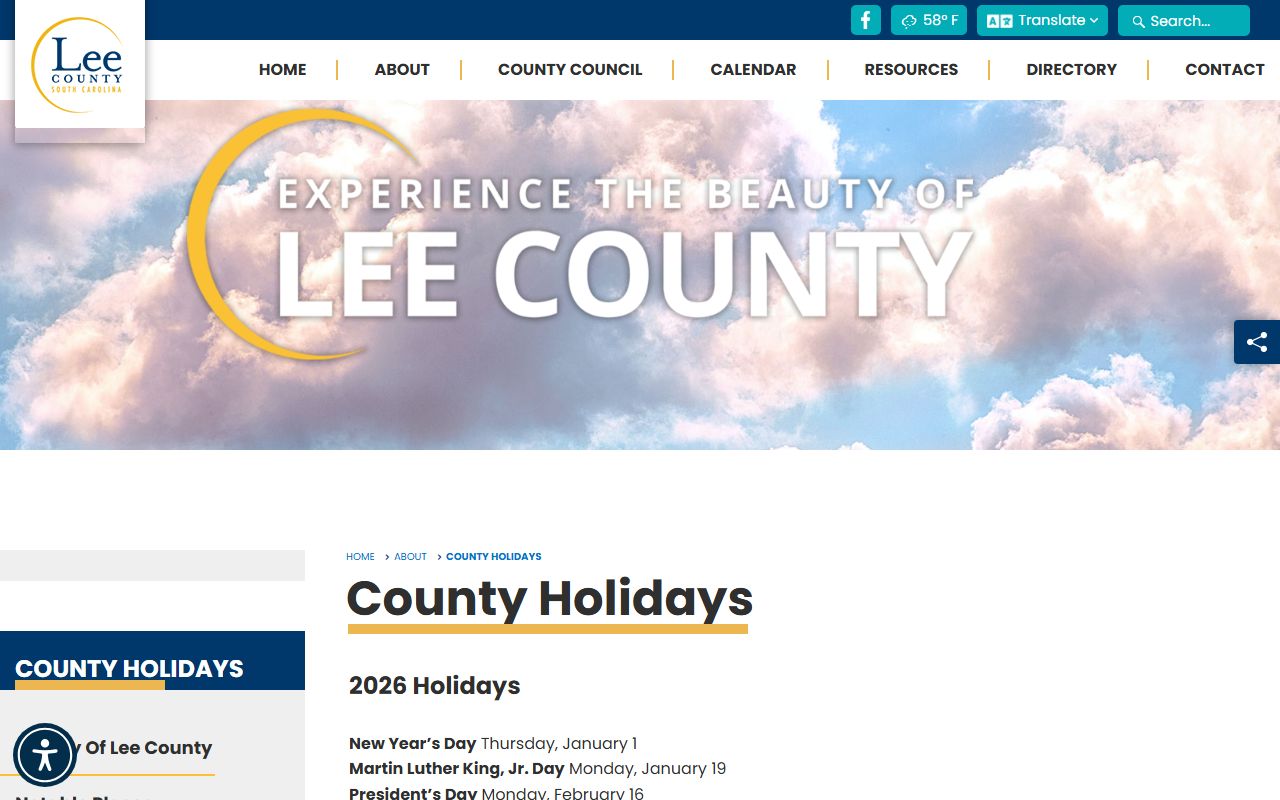
Holiday closures can affect courthouse counters even when state-hosted record portals remain online.
Lee County Court History
Lee County was formed in 1902 from parts of Darlington, Kershaw, and Sumter counties, with Bishopville as the county seat. That history matters most for older or genealogical records, because a record before Lee County's creation may have ties to predecessor counties. Modern court-record access is through Lee County and South Carolina Judicial Branch sources.
The county's official history also notes Lee County's rural character, Bishopville and Lynchburg as major towns, and the area's long cotton-farming context. The Lee County history page is one of the home-page sources.
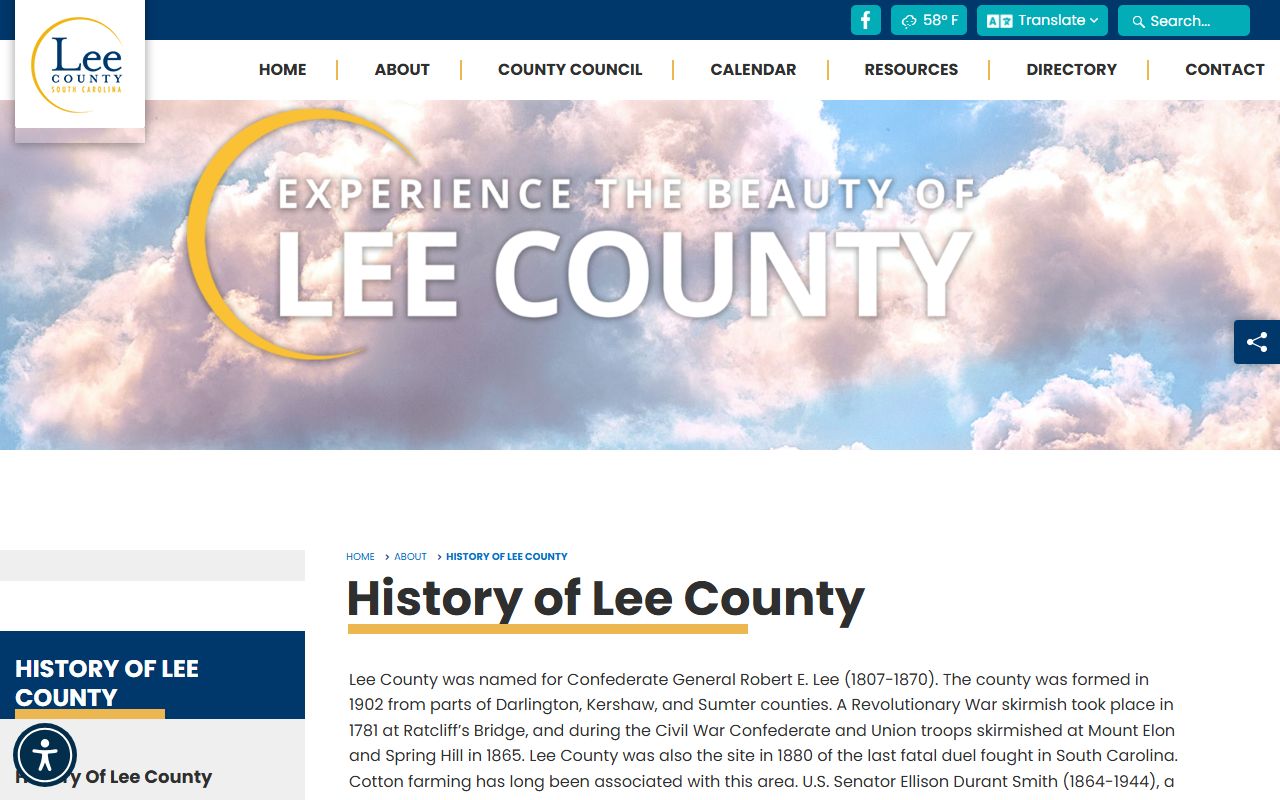
That history gives useful local context without changing the modern court routes for Circuit, Magistrate, Probate, and detention records.
Frequently Asked Questions
Where do Lee County court records start?
Start with the South Carolina Judicial Branch case search for public Circuit Court records. Use the Lee Public Index for case details and Lee Court Rosters for hearing calendars. If the record is traffic, probate, custody, or statewide criminal history, use the specific office or state system for that record type.
Does Lee County have an online warrant list?
No official online active-warrant list was confirmed in the research. Call Lee County Magistrate Court at 803-484-6463 and choose Warrants Option 3, or call the Sheriff's Office warrants and records contact at 803-483-3121. SLED CATCH is not a wanted-person search.
Where are Lee County inmates searched?
Current local custody is handled through Sumter-Lee Regional Detention Center and its linked CentralSquare inmate inquiry. State prison custody is searched through SCDC. Federal custody is searched through the Bureau of Prisons, not a Lee County court or jail page.
Who issues marriage licenses in Lee County?
Lee County Probate Court issues marriage licenses and says appointments are required. South Carolina DPH marriage certificates are a separate state vital-records product for covered years. Divorce decrees come from the Clerk of Court where filed, while DPH divorce reports are not decrees.
Can the Clerk run a criminal background check?
The Lee County Clerk page says the office does not provide record checks. It can provide a $2 statement as to anything filed of record. For a statewide South Carolina criminal-history search, use SLED CATCH and understand that it is name-based and excludes wanted persons.